Mission
How do people develop their views on abortion? How do race and religion impact these views? The Reproductive Politics lab investigates these questions. Launched in 2021, the Lab is focused on two areas. One team of undergraduate and graduate research assistants is conducting qualitative interviews with young people in the Nashville area on the multiple meanings of abortion. Another team of research assistants is conducting interviews with healthcare providers on how abortion bans impact the practice of healthcare.
Current Project: “The Contested Meaning of Abortion”
The Reproductive Politics lab is currently recruiting medical practitioners and patient advocates in Tennessee and Georgia for a research project entitled “The Contested Meaning of Abortion.” Qualitative interviews and a survey that investigates how individuals navigate patient care after the Dobbs decision is the main component of the study. Any participation in either the survey and/or the interview is anonymous.
If you are interested in participating in the survey, please click here.
If you are interested in participating in an interview, please email Hannah Thorpe if you are located in Tennessee, or email Jasmine Keyes if you are located in Georgia.
About Us: Current Research Assistants
Anna-Grace Lilly graduated from Vanderbilt University with a degree in Medicine, Health and Society and minors in French and Anthropology in May 2023. She has worked as a research assistant in the Reproductive Politics Lab at Vanderbilt University since Fall 2020. She has also previously worked in the Vanderbilt University Infant Learning Lab and has been working in an Obstetrics and Gynecology Lab at NYU Grossman School of Medicine since Spring 2022. Her work includes publications on the subject of medically indicated fertility preservation, facilitators and barriers to LGBTQ reproductive healthcare, decision-making tools for parents who receive a fetal anomaly diagnosis, and the effects of abortion bans on reproductive healthcare providers. Anna-Grace will be attending medical school at The University of Toledo College of Medicine and Life Sciences in July 2024.
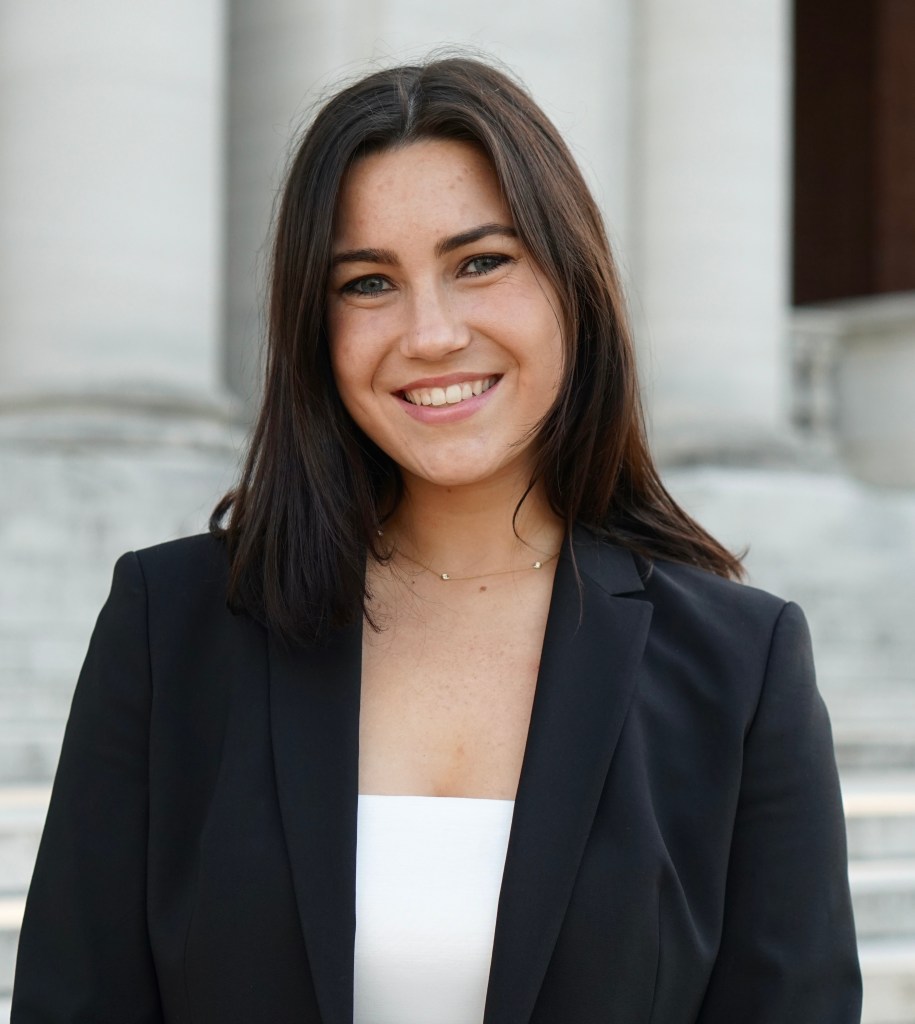

Isabelle Newman graduated from Vanderbilt University in 2023 with a degree in Medicine Health and Society and a minor in Neuroscience. She has been part of the Reproductive Politics Lab since 2020. During her time at Vanderbilt, Isabelle also worked in a Juvenile Arthritis Lab and published a paper on pre-medical education in The Advisor detailing research on a class she created. After college, Isabelle worked as a medical assistant and mentored a youth in the juvenile detention and shelter system in her hometown of Pennsylvania. She plans to start medical school in August of 2024 at the University of Virginia School of Medicine.
Jasmine Ariel Keyes, a second-year Ph.D. student at Vanderbilt University, specializes in cultural and medical anthropology. She graduated Magna Cum Laude from Agnes Scott College with distinctions from Phi Beta Kappa and Omicron Delta Kappa. Her undergraduate research, “Race and The Medical System,” explored the impact of neocolonialism on racial health disparities during COVID-19. Her senior thesis, “Race and Embodiment,” examined the clinical encounter’s power dynamics affecting African American women’s self-perception. Jasmine’s research dissects embodied difference in clinical settings, analyzing the mediation of bodily knowledge and otherness from colonial to contemporary times. Her focus on Black bodies encompasses discourses of death, surveillance, and pain, considering their commodification in late-stage capitalism. Inspired by plantation geographies, hospice centers, and gravesites, Jasmine is fascinated by breach and repair sites, connecting them to Blackness’s ontological aspects in America.


Hannah Thorpe is a third-year doctoral student in the Anthropology program at Vanderbilt. She previously completed a bachelor’s degree majoring in both Psychology and Religious Studies at Elon University, where she completed a project entitled “‘Strangers in a Strange Land:’ Jewish Responses to White Nationalism During the Trump Era,” which can be found in the Journal for Interreligious Studies. Hannah moved on to receive a Masters in Theological Studies, with a concentration in Modern Religious Thought and Experience, from Emory University. Her thesis included archival work on the women’s chapter of the Ku Klux Klan during the 1920s. At Vanderbilt, Hannah’s research on Christian Nationalism in Tennessee, with a focus on gender and sexual politics, has practical implications for the field of reproductive health. Her work in this area, as both a cultural and medical anthropologist, is particularly relevant in the context of the Southeastern United States. She engages spatial and historical lenses in the study of white supremacy in the United States and includes theoretical understandings of discursive violence, slow violence, and medical violence.
 Sophie Bjork-James, PhD